School of Open Learning, University of Delhi
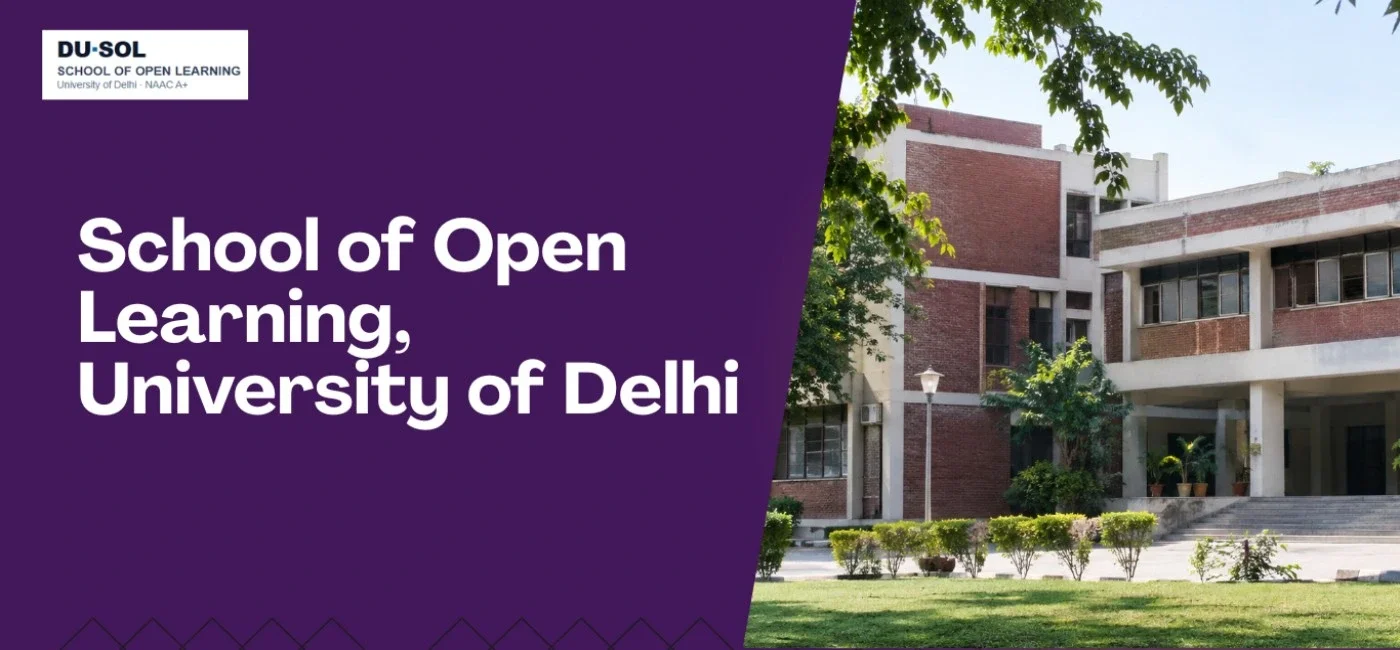
The School of Open Learning, University of Delhi is one of the established institutions in India providing higher education through the Open and Distance Learning (ODL) mode. Established in 1962, it was introduced to make university education accessible to students who could not pursue regular classroom-based programmes. The institution operates under the Campus of Open Learning, University of Delhi, and offers undergraduate and postgraduate programmes across different academic disciplines. Its flexible learning structure allows students to continue their education while managing professional, personal and other academic commitments.
Over the years, the institution has expanded its academic programmes, student support facilities and digital learning infrastructure. Students can access self-learning materials, academic notifications, examination information and other essential services through dedicated online platforms. The availability of regional study centres and Personal Contact Programmes further supports students during their academic journey. These facilities make distance education more accessible to learners from different educational and professional backgrounds. Students interested in flexible higher education can explore the available courses, admission requirements and academic facilities before selecting a programme.
Overview of School of Open Learning, University of Delhi
The School of Open Learning (SOL) functions under the University of Delhi and provides an alternative pathway for students seeking recognised higher education through distance learning. Its academic framework focuses on independent learning supported by university-provided study materials and student services. Unlike regular college programmes, the distance learning system does not require students to attend daily classroom lectures. Instead, learners are expected to follow the prescribed curriculum, complete assignments and appear for examinations according to the university's academic schedule.
The institution has developed several facilities to support students throughout the admission and learning process. These include online admission services, digital study materials, examination-related information and academic assistance. The university also provides information about undergraduate and postgraduate programmes through its official portals. The following table presents the basic institutional details for students who want to understand the university's structure.
Particulars | Details |
|---|---|
Institution | School of Open Learning (SOL) |
University | University of Delhi |
Established | 1962 |
Education Mode | Open and Distance Learning |
Parent Institution | Campus of Open Learning |
Academic Department | Department of Distance and Continuing Education |
Location | Delhi, India |
Programme Levels | Undergraduate and Postgraduate |
Learning Resources | Self-Learning Materials and Digital Resources |
Student Support | Regional Study Centres and Online Services |
Official Website |
Important institutional features:
Established under the University of Delhi.
Provides undergraduate and postgraduate education.
Offers flexible learning opportunities.
Provides access to academic study materials.
Supports students through online academic services.
Conducts examinations according to university guidelines.
History and Development of DU SOL
The School of Open Learning was established in 1962 as the Directorate of Correspondence Courses under the University of Delhi. Its primary objective was to extend higher education opportunities to students who could not attend regular college programmes. Initially, the institution offered a limited number of academic programmes, particularly in Commerce and Humanities. The introduction of correspondence-based education created an alternative for learners who needed greater flexibility in their studies. This initiative also contributed to the development of distance education within the Indian higher education system.
In 1968, the institution was renamed the School of Correspondence Courses and Continuing Education. Later, in 2004, it adopted the name School of Open Learning to reflect its broader educational approach. In 2022, the University of Delhi established the Department of Distance and Continuing Education under the Campus of Open Learning framework. This development strengthened the academic and administrative structure of distance education at the university. Over time, digital resources and online student services have become important components of its learning system.
Important milestones in the development of DU SOL:
Year | Development |
|---|---|
1962 | Established as the Directorate of Correspondence Courses |
1968 | Renamed School of Correspondence Courses and Continuing Education |
2004 | Renamed School of Open Learning |
2022 | Development of the Department of Distance and Continuing Education under the Campus of Open Learning framework |
Present | Expanded academic programmes and digital learning facilities |
Courses Offered by School of Open Learning, University of Delhi
The institution offers undergraduate and postgraduate programmes in different academic disciplines, including Arts, Commerce, Management, Economics, Computer Science and Library Science. These programmes are designed for students who want to pursue higher education without attending regular classroom sessions. Applicants can select a course based on their previous educational qualifications, academic interests and future career objectives. Programme availability and admission conditions may vary depending on the academic session. Therefore, checking the latest prospectus is important before making an application.
The undergraduate programmes generally provide foundational knowledge in the selected subject, while postgraduate courses offer advanced academic learning. Students can explore options related to business administration, finance, humanities, commerce and information science. The university publishes programme-specific information through its admission portals. The following tables provide an overview of the courses listed for the 2026–27 academic session.
Undergraduate Courses
Undergraduate programmes are suitable for students who have completed their Class 12 education and want to pursue a bachelor's degree. The available options cover several academic areas, allowing applicants to select subjects according to their interests and educational backgrounds. Some programmes focus on specialised disciplines, while others provide broader interdisciplinary learning. Students should review the eligibility requirements and subject combinations before selecting a course.
Course Name | Academic Field |
|---|---|
B.A. Programme | Arts and Humanities |
B.A. (Hons.) English | English Literature |
B.A. (Hons.) Political Science | Political Science |
B.A. (Hons.) Economics | Economics |
B.Com. | Commerce |
B.Com. (Hons.) | Commerce and Accounting |
B.Sc. (Hons.) Computer Science | Computer Science |
Bachelor of Management Studies (BMS) | Management |
BBA (Financial Investment Analysis) | Business and Finance |
B.A. Programme with Computer Applications | Computer Applications |
B.A. Programme with Economics | Economics |
B.A. Programme with Education | Education |
B.A. Programme with English | English |
B.A. Programme with Hindi | Hindi |
B.A. Programme with History | History |
B.A. Programme with Mathematics | Mathematics |
B.A. Programme with Political Science | Political Science |
B.A. Programme with Sanskrit/Urdu | Languages |
Key points for undergraduate applicants:
Applicants should have completed Class 12 from a recognised board.
Subject requirements may differ between programmes.
Minimum qualifying marks depend on the selected course.
Programme combinations should be checked before registration.
Applicants should review the current admission prospectus.
Postgraduate Courses
Postgraduate programmes are intended for students who have completed their bachelor's degree and want to pursue advanced academic qualifications. The available courses cover disciplines such as Management, Commerce, Humanities and Library Science. These programmes help students develop specialised subject knowledge and prepare for further academic or professional opportunities. Certain programmes may have additional eligibility conditions based on the applicant's previous qualifications. Applicants should carefully review the programme-specific admission guidelines.
Course Name | Academic Field |
|---|---|
Master of Business Administration (MBA) | Business Management |
MBA (Executive) Healthcare Administration | Healthcare Management |
M.A. Hindi | Hindi |
M.A. Sanskrit | Sanskrit |
M.A. History | History |
M.A. Political Science | Political Science |
M.Com. | Commerce |
Bachelor of Library and Information Science (BLISc) | Library Science |
Master of Library and Information Science (MLISc) | Library and Information Science |
PGDADLM | Automated and Digital Library Management |
Factors to consider before selecting a postgraduate course:
Previous educational qualification.
Programme-specific eligibility requirements.
Course duration and academic structure.
Career objectives and higher education plans.
Programme fee and examination requirements.
Eligibility Criteria for DU SOL Admission
The eligibility criteria depend on the programme selected by the applicant. Undergraduate applicants generally need to complete their Class 12 education from a recognised board, while postgraduate applicants must hold the required bachelor's degree. Some programmes may have specific subject combinations or minimum percentage requirements. Applicants should also check whether any additional admission conditions apply to their selected course. Meeting the eligibility requirements is essential before submitting the online application.
The university publishes course-wise eligibility information through its admission portal and prospectus. Applicants should carefully check the requirements rather than assuming that the same criteria apply to every programme. Reserved-category applicants should also review the applicable relaxation provisions mentioned in the admission guidelines. The following tables provide a general overview of the eligibility requirements.
Undergraduate Eligibility
Requirement | General Eligibility |
|---|---|
Educational Qualification | Class 12 or equivalent |
Recognised Board | Recognised education board |
Minimum Marks | As prescribed for the selected programme |
Subject Requirements | Applicable to selected courses |
Documents | Class 10 and Class 12 certificates |
Admission Process | Online application |
Important eligibility points:
Students must have passed the qualifying examination.
Applicants should check programme-specific subject requirements.
Relevant certificates should be available during registration.
Information entered in the application must match academic documents.
Postgraduate Eligibility
Requirement | General Eligibility |
|---|---|
Educational Qualification | Bachelor's degree |
Degree Recognition | Recognised university |
Minimum Marks | As prescribed for the programme |
Subject Requirements | Programme-specific |
Documents | Graduation marksheets and degree certificate |
Admission Process | Online application |
Applicants interested in management, commerce or specialised postgraduate programmes should check the detailed admission guidelines. The university may prescribe additional conditions depending on the selected course. Students should also verify the applicable duration and examination structure before completing registration. The latest prospectus should be treated as the primary reference for admission-related decisions.
Admission Process at School of Open Learning, University of Delhi
The admission process is conducted through the university's online admission system. Applicants can access programme details, eligibility requirements, prospectuses and registration facilities through the official portal. The online process generally involves selecting a course, entering personal and academic information, uploading the required documents and paying the applicable fee. Students should ensure that all details are correct before submitting the application. Incomplete or incorrect information may create difficulties during document verification or admission processing.
The university provides separate admission facilities for different programme levels. Applicants should use the relevant portal and follow the instructions published for the selected academic session. After completing registration, students should retain the application number and payment receipt for future reference. Regularly checking the admission portal is also important because application verification and admission notifications may be updated online.
Steps to Apply Online
Visit the official website: Open the DU SOL website at https://sol.du.ac.in/.
Select the admission section: Choose the relevant undergraduate or postgraduate admission option.
Explore available courses: Review the programme details and select the preferred course.
Check eligibility: Read the admission requirements mentioned in the prospectus.
Complete registration: Enter personal details, contact information and academic qualifications.
Upload documents: Submit the required photographs, signatures and certificates.
Pay the admission fee: Complete the online payment using the available payment options.
Review the application: Verify the entered information before final submission.
Download confirmation: Save the application form and payment receipt.
Admission Process Highlights
Admission Stage | Required Action |
|---|---|
Programme Selection | Choose the preferred course |
Registration | Create an application account |
Form Filling | Enter personal and academic details |
Document Upload | Upload supporting certificates |
Fee Payment | Pay the applicable amount |
Submission | Submit the completed application |
Confirmation | Save the admission acknowledgement |
Documents Required for Admission
Applicants should arrange the necessary documents before beginning the online application process. These documents help the university verify the applicant's identity, educational qualifications and eligibility for the selected programme. The exact requirements may vary depending on the course and applicant category. All uploaded documents should be clear and readable to avoid difficulties during verification. Students should also ensure that their personal details are consistent across the application form and supporting certificates.
The university may request additional documents in specific cases, particularly for applicants claiming category-based benefits or other applicable concessions. Students should follow the document specifications mentioned in the latest admission instructions. Keeping digital copies of important certificates can make the registration process easier. The following table lists commonly required documents.
Document | Purpose |
|---|---|
Class 10 Marksheet | Date of birth and academic verification |
Class 12 Marksheet | Undergraduate eligibility |
Graduation Marksheet | Postgraduate eligibility |
Degree Certificate | Verification of graduation |
Passport-Size Photograph | Applicant identification |
Scanned Signature | Online application verification |
Identity Proof | Personal identification |
Category Certificate | Applicable reservation benefits |
Other Supporting Certificates | As required by the programme |
Document preparation tips:
Use clear and properly scanned documents.
Check the prescribed file format and size.
Ensure that the name matches across certificates.
Upload the correct document in each section.
Keep original certificates available for verification, if required.
Study Material and Learning Facilities
The university provides academic resources to support students enrolled in distance education programmes. Self-Learning Materials (SLM) are an important part of the learning system because students primarily depend on independent study. These materials are organised according to the prescribed course curriculum and help learners understand important concepts. Students can access available digital learning resources through the university's academic platforms. Regular use of these resources can help students prepare for assignments and examinations.
Apart from study materials, the university provides additional academic support facilities. These include Personal Contact Programmes, digital learning services, library resources and online student information systems. Such facilities are intended to improve access to academic guidance and institutional information. Students should regularly check the relevant portals for updated materials and academic notifications.
Major Learning Facilities
Facility | Purpose |
|---|---|
Self-Learning Materials | Support independent academic study |
Digital Learning Resources | Provide access to online educational content |
Personal Contact Programmes | Offer academic interaction and guidance |
Library Facilities | Provide reference and research resources |
Student Dashboard | Access student-related information |
PRAGYAN LMS | Support digital learning and academic activities |
Importance of Self-Learning Materials
Self-Learning Materials help students study independently without depending entirely on classroom teaching. These resources generally follow the prescribed academic syllabus and provide subject-related explanations.
Some important uses include:
Understanding course concepts and topics.
Preparing for internal assessments and assignments.
Revising important examination topics.
Developing independent study habits.
Accessing academic content according to individual schedules.
Students should download the latest available materials for their enrolled courses and refer to the prescribed syllabus while preparing for examinations.
Regional Study Centres of DU SOL
Regional study centres provide academic and administrative support to students enrolled in distance learning programmes. These centres can help learners access selected institutional facilities and obtain assistance when required. They also support academic activities and student interactions through available university arrangements. Students should identify the relevant centre according to their programme and the instructions provided by the university. Centre-specific services and operating arrangements may differ.
The university has established facilities in different parts of Delhi to improve student accessibility. Applicants should verify the latest address and service availability before visiting a particular location. Some academic activities may be conducted at designated centres according to the university's schedule. The following table presents important study centre locations.
Study Centre | Location |
|---|---|
North Study Centre | 5 Cavalry Lane, University of Delhi, Delhi - 110007 |
South Study Centre | South Moti Bagh, New Delhi – 110021 |
West Regional Centre | Keshav Puram, Lawrence Road, Delhi – 110035 |
East Study Centre | Tahirpur Village, Delhi – 110095 |
Students should remember:
Verify the centre assigned to the programme.
Check the latest address before travelling.
Follow the published academic schedule.
Carry relevant student identification when visiting.
Confirm the availability of the required service in advance.
Benefits of Studying at School of Open Learning, University of Delhi
Distance education provides an alternative for students who need flexibility in their academic schedules. The institution offers opportunities to pursue higher education while managing employment, competitive examination preparation and personal responsibilities. Its academic programmes cover multiple disciplines, allowing students to select courses according to their educational interests. Online resources and student services also make it easier to access important academic information. These features contribute to the institution's role in providing flexible higher education.
The learning structure also encourages students to develop independent study habits and time-management skills. Students can organise their preparation according to personal schedules while following the university's academic requirements. However, distance education requires consistent effort because learners are responsible for completing assignments and preparing for examinations. The benefits of this learning format are most effective when students follow a planned academic routine.
Major Advantages
Benefit | Explanation |
|---|---|
Flexible Learning | Allows independent study schedules |
University Affiliation | Programmes offered under the University of Delhi |
Course Diversity | Options across Arts, Commerce and Management |
Digital Resources | Access to online study materials |
Academic Support | Availability of selected support facilities |
Accessibility | Suitable for learners unable to attend regular classes |
Independent Learning | Encourages self-study and time management |
Who Should Consider DU SOL?
The distance learning format may be suitable for:
Students who cannot attend regular college classes.
Working professionals interested in higher education.
Learners preparing for competitive examinations.
Students managing family or personal responsibilities.
Individuals seeking an additional academic qualification.
Students interested in flexible study arrangements.
Career Opportunities After Completing DU SOL Courses
Career opportunities after completing a programme depend on the selected qualification, academic performance, professional skills and additional certifications. Undergraduate graduates can explore entry-level opportunities across different industries, while postgraduate qualifications may support applications for specialised roles. Students should also consider internships, practical experience and skill-development programmes to strengthen their employment profiles. A degree alone may not guarantee a particular job or salary, as recruitment requirements differ across organisations.
Students interested in higher education can explore further academic programmes according to the eligibility requirements of the relevant institutions. Those preparing for government employment should check the educational qualifications specified in individual recruitment notifications. Professional courses and additional certifications can also help learners develop industry-related skills. The following table provides examples of possible career pathways.
Qualification | Potential Career Opportunities |
|---|---|
B.A. | Administration, Content Writing, Customer Support |
B.A. (Hons.) English | Editing, Writing, Communication |
B.A. (Hons.) Economics | Research Assistance, Banking, Economic Analysis |
B.Com. | Accounting, Banking Support, Finance Operations |
B.Com. (Hons.) | Accounting, Taxation, Financial Services |
B.Sc. Computer Science | IT Support, Software-related Roles |
BMS / BBA (FIA) | Business Operations, Finance, Management |
M.A. | Research, Education and Subject-related Roles |
M.Com. | Accounting, Finance and Teaching after required qualifications |
MBA | Marketing, Human Resources, Operations and Management |
BLISc / MLISc | Library and Information Services |
Ways to improve career opportunities:
Develop communication and professional skills.
Learn relevant computer and digital tools.
Participate in internships and practical projects.
Build a professional resume and portfolio.
Explore additional industry-recognised certifications.
Research job-specific eligibility requirements.
Important Student Services and Online Portals
The university provides online facilities to help students manage different academic activities. These services cover admission registration, study materials, examination information and other student-related requirements. Different portals may be used for undergraduate and postgraduate admission or specific academic services. Students should access these facilities through the official university website to avoid outdated or incorrect links. Regularly checking the relevant portals can help learners remain informed about important academic developments.
Online services are particularly useful for students who cannot visit the university frequently. They provide access to essential information and reduce the need for physical visits for routine academic activities. However, the availability of particular services may depend on the programme and academic session. Students should follow the instructions published on the relevant portal.
Online Service | Purpose |
|---|---|
Official DU SOL Website | Institutional information and notifications |
Undergraduate Admission Portal | UG application and admission updates |
Postgraduate Admission Portal | PG registration and admission information |
Study Material Portal | Access to academic resources |
Student Dashboard | Student information and academic services |
PRAGYAN LMS | Digital learning and academic activities |
Examination Services | Examination forms and related updates |
Result Portal | Access to examination results |
Grievance Services | Submit academic or administrative complaints |
Placement Support | Access available career-related assistance |
Important Tips for DU SOL Students
Students enrolled in distance education programmes should maintain a consistent approach towards academic preparation. Unlike regular classroom-based education, independent learning requires proper planning and time management. Learners should regularly access study materials and follow the prescribed syllabus for their selected courses. Completing assignments within the announced deadlines is equally important. Staying informed about examination schedules and university notifications can help prevent unnecessary academic difficulties.
Students should also maintain copies of their admission documents, fee receipts and examination-related records. These documents may be required when accessing university services or resolving academic issues. It is advisable to use the official portal for updated information rather than depending entirely on unofficial sources. A structured study routine can help students manage their academic responsibilities more effectively.
Academic Checklist
Download the latest study materials.
Review the syllabus for each subject.
Follow the academic calendar.
Complete assignments before the deadline.
Check examination notifications regularly.
Attend available academic support sessions.
Maintain copies of admission and payment receipts.
Verify examination form submission.
Check results and marksheets after examinations.
Contact the university through the appropriate support channel when necessary.
Conclusion
The School of Open Learning, University of Delhi provides students with an alternative pathway to undergraduate and postgraduate education through the distance learning system. Its range of academic programmes, self-learning materials, online student services and regional support facilities contribute to a flexible educational environment. The institution is particularly relevant for learners who need to balance their academic goals with employment, competitive examinations or other responsibilities. Students can explore different programmes based on their previous qualifications and future academic interests.
Before applying, applicants should carefully review course availability, eligibility conditions, fee details and programme duration. It is equally important to follow the latest admission notifications and instructions published by the university. Students who maintain a consistent study routine and make effective use of the available academic resources can manage their distance education programmes more efficiently. Proper planning and regular attention to university updates are essential throughout the learning journey.
Frequently Asked Questions (FAQs)
1. What is the School of Open Learning, University of Delhi?
It is a distance education institution functioning under the University of Delhi. Established in 1962, it provides undergraduate and postgraduate programmes through the Open and Distance Learning mode. Students can access academic resources and selected support facilities through university platforms.
2. When was DU SOL established?
The institution was established in 1962 as the Directorate of Correspondence Courses. It was later renamed the School of Correspondence Courses and Continuing Education in 1968 and adopted the name School of Open Learning in 2004.
3. Which courses are available at DU SOL?
The institution offers undergraduate programmes such as B.A., B.Com., B.Sc. (Hons.) Computer Science, BMS and BBA (FIA). Postgraduate options include M.A., M.Com., MBA, BLISc, MLISc and other programmes, subject to the applicable academic session.
4. How can students apply for DU SOL admission?
Applicants can visit the official website, select their preferred programme, review eligibility requirements, complete the online registration form, upload the necessary documents and pay the applicable admission fee. The application confirmation should be saved for future reference.
5. Does DU SOL provide online study materials?
Yes. Students can access available self-learning materials through the university's study material portal. These resources help learners understand the prescribed syllabus and prepare for assignments and examinations.
6. Can working professionals study at DU SOL?
Yes. The distance learning format allows working professionals to manage their education alongside employment and other responsibilities. However, students must complete assignments, examinations and other academic requirements within the prescribed timelines.
7. Are DU SOL degrees valid for higher education and employment?
Qualifications awarded by the University of Delhi through programmes recognised under the applicable regulations can be considered for higher education and employment. Acceptance depends on the programme's recognition status and the eligibility requirements of the relevant institution or recruiting authority.
8. How can students check DU SOL admission updates?
Students can visit the official website at https://sol.du.ac.in/ to access admission notifications, prospectuses, programme information and other academic updates. They should also check the relevant admission portal for application-related information.
Need Guidance for Delhi University SOL?
Our academic advisors provide free step-by-step assistance for eligibility, subject selection, and document verification.